
There is so much about running a creative business that you simply cannot control. Whether a particular client says yes. The state of the economy. What someone makes of your work once it has left your hands. We spend so much of our energy there, in the part we can’t touch… when the one thing that is always, completely ours is sitting quietly to one side, waiting to be picked up.
How you respond. What you decide it means. What you do next. The story you tell yourself about what’s just happened. That part nobody can take from you, on any day, in any week, however it’s going. And once you really feel the weight of it, a great deal starts to shift.
I want to be honest about why this matters so much to me. Even now, after all these years, there are still weeks that knock me. The inbox goes quiet and the mind fills it with stories awfully quickly. A no arrives and somehow outweighs all the yeses. A piece of work doesn’t do what I’d hoped, and I feel a little foolish for having hoped at all. These days happen. They happen to me, and they happen to every creative business owner I’ve worked with, including the ones whose businesses you’d look at and assume never wobble for a moment.
So the question was never really how to stop the hard days coming. They come. The question that actually matters is what we do when they arrive. And what I’ve found, over years of these weeks, is that the difference between the days that flatten me and the days that don’t has very little to do with what’s actually happened, and almost everything to do with what I do with it, before I do anything else at all.
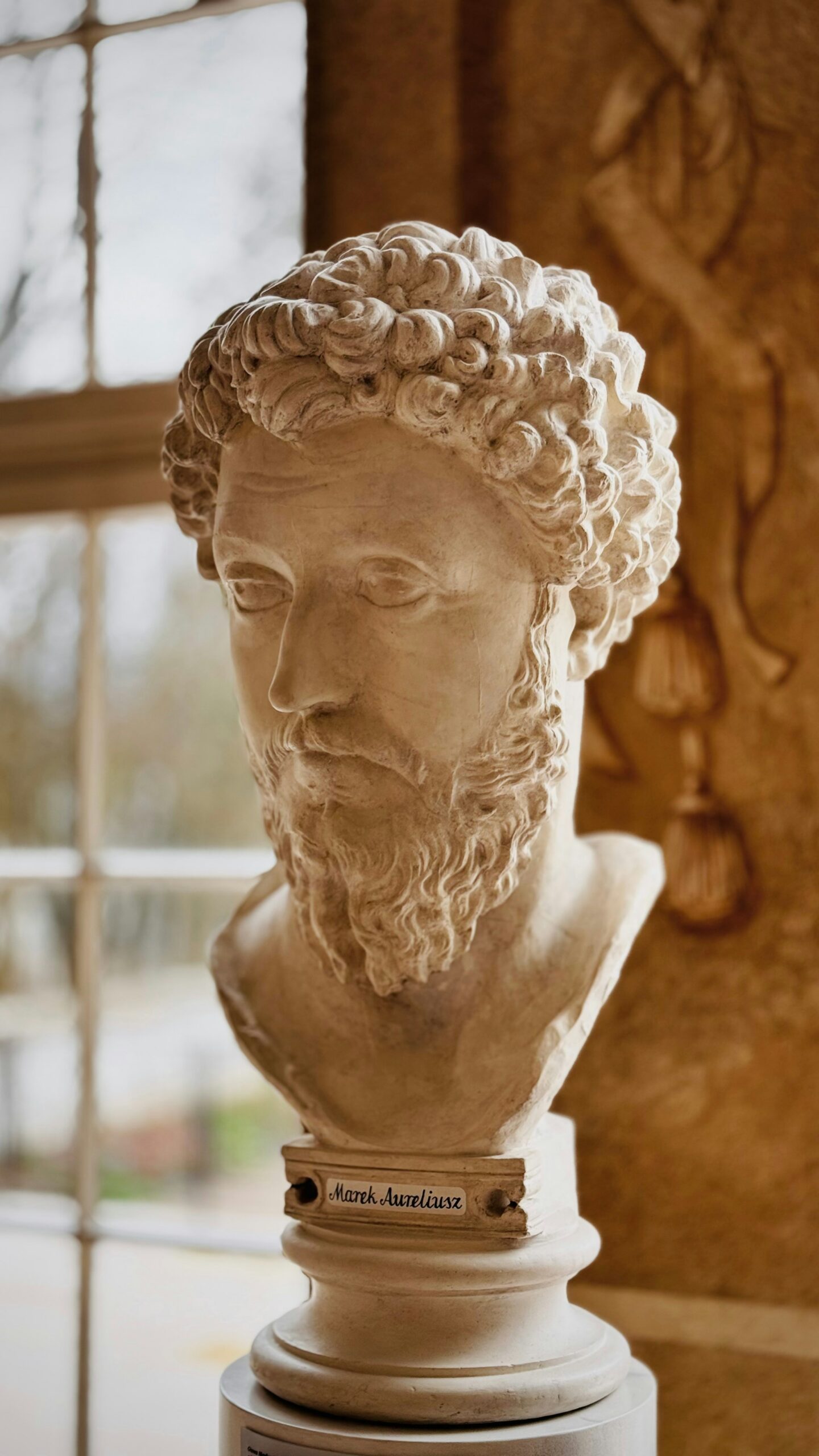
The Stoic philosophers were writing about exactly this two thousand years ago. Marcus Aurelius, Epictetus. They put it rather beautifully: there are things within your control and things outside it, and the whole of wisdom is learning to tell the difference, and then pouring your energy into the part that’s actually yours. Two thousand years on, and here we still are, relearning it on a wet Tuesday with a quiet inbox.
There is almost always a second reading
This is the part I’d most love you to hold onto, because it’s so easily mistaken for naive optimism, and it’s really the opposite. It’s one of the most practical things I know.
How you read a situation decides how you respond to it. And how you respond decides what happens next. So when something difficult turns up, there is almost always a second reading available to you. Not a forced silver lining. A true one, that you’d have missed entirely if you’d stayed with the first.
A quiet enquiry week. The first reading is the obvious one: it’s all drying up. The second is that here, at last, is the space to do the deeper work you’ve been putting off for months. The positioning you keep meaning to sharpen. The website you keep meaning to rewrite. The reaching out to the people you’d really love to work with. Some of the most valuable work in a business gets done in the quiet weeks, precisely because there’s finally room for it.
A no from someone you really hoped would say yes. The first reading is rejection. The second is information, and a clearing; every no frees you a little for the people who are right for you, and it usually tells you something useful about what you might say a little differently next time.
A competitor doing beautifully. The first reading is the panicky one, the comparison one. The second is much steadier: it’s simply proof that the market is alive, that there’s real appetite for this kind of work. And your particular thing, the way only you do it, well, that was never theirs to take anyway.
Same situation, every time. Two completely different readings. And the reading you choose quietly decides what you do next, which decides what comes after that. Over a year, over several years, those small daily choices add up to two completely different businesses. Two rather different lives, really.
There’s a story I keep coming back to here. Sara Blakely, who built Spanx, has spoken about how her father would ask her and her brother the same thing around the dinner table each week. Not what did you achieve this week. What did you fail at this week? And if the answer was nothing, he was disappointed, because it meant they hadn’t tried anything new. Failure, in that house, was simply the evidence that you’d had a proper go.
I find that such a lovely thing to hold over your own work. What if every difficult thing this week were just… evidence that you’re actually doing the work? That you’re in it, reaching for something, rather than safely doing nothing at all? It’s a very different feeling to carry around with you. Much lighter. And much closer to the truth.
When the doubt creeps in, turn outwards
If there’s one practical thing to do with all of this, it’s this one, because it’s the one I lean on most.
So much of the heaviness on a hard day comes from looking inwards. Am I good enough. Am I charging too much. What will they think of me. That inward gaze is exhausting, and it’s almost always where the doubt actually lives.
So when you feel it, try turning the whole thing outwards instead. Towards the people you’re really here to serve. And ask one question: how do I do the very best possible job I can for them? The moment your attention is properly on serving someone brilliantly, there is simply no room left for the self-doubt. The question quietly changes from will I make it… to how can I help them find me. And that second question is so much kinder. So much more useful. So much quieter to live inside.
There’s far more to all of this, of course. But the heart of it is really very simple. You have more control than you’ve been letting yourself believe. Not over what happens to you; that was never the part that mattered most. But over what you make of it. Every single time.
And that, quietly, is more than enough.
Comments +